
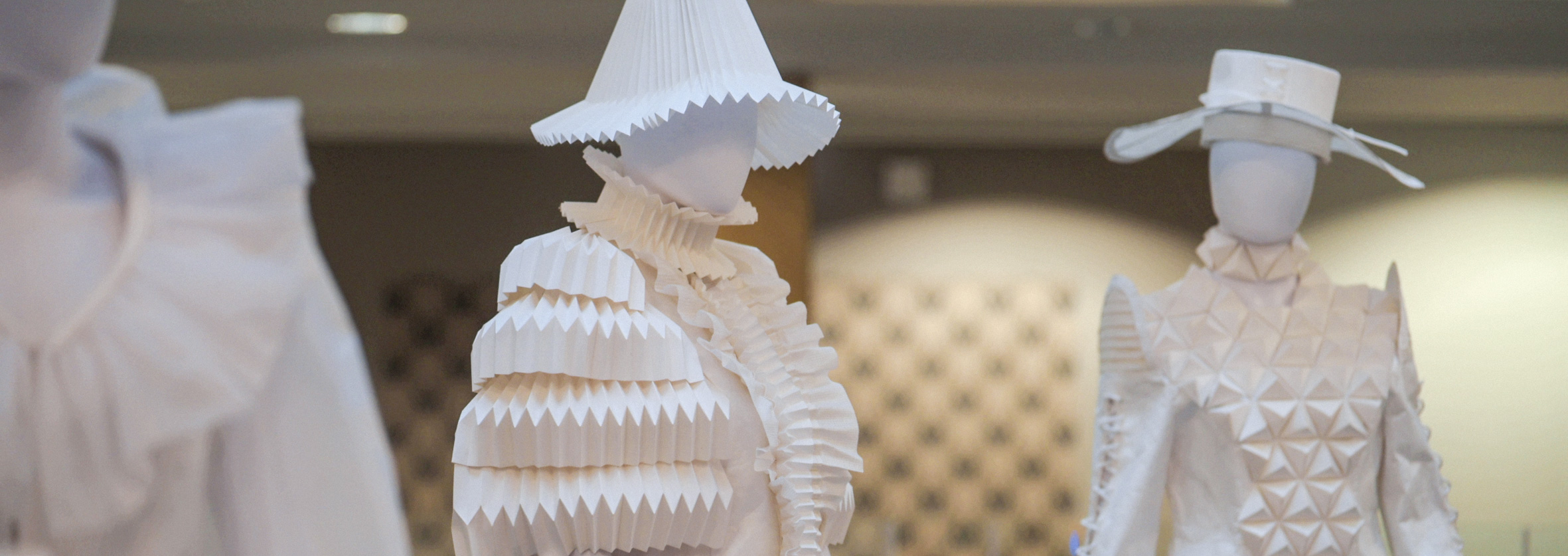
National University Library (BNU), 13 September 2025 – In celebration of UNESCO’s International Literacy Day, observed annually on 8 September, Strasbourg’s National University Library (BNU) was transformed into a literary wonderland over the weekend of the 13th of September, highlighting the power of paper and literature. Central to this event was the unveiling of the exhibition “Fashion Through Folds: Paper, Malta, Strasbourg”, by Maltese artist James Dimech, whose sculptural interpretations of paper invited visitors to experience the material in entirely new ways.
The exhibition, curated by Mr Sean Buhagiar, featured works from Dimech’s series Dress Code – At the Mad Hatter, including the commanding Sentinel of Stories. Paper (made of cork paper, kraft-tex, milk tissue paper, and recycled fibers) was treated as both medium and subject: cut, pleated, stitched, and folded into collars, ruffs, and veils. Displayed on the library’s second floor, the four paper-dressed mannequins engaged in a dialogue with the space, carrying the talent of Malta into the heart of Strasbourg’s main library.
Dimech’s garments drew on the lineage of folding from page to pleat, tipping a hat to Carroll’s tea-table of wonder. Each fold and seam recorded a balance between fragility and strength, offering a contemplative reflection on the possibilities of design and sustainability. Visitors, mostly students, were invited to see paper as both reader and read — a guardian of knowledge and a narrative in motion, bridging history and imagination through wearable art.The exhibition was opened by the director of the library, Mr Alain Colas, with the Permanent Representative of Malta to the Council of Europe, Ambassador Camilleri Vettiger, also offering remarks. The artworks attracted members of the Strasbourg public, the Maltese community, and local cultural institutions, who engaged with the pieces’ inventive interpretations of material and narrative.